


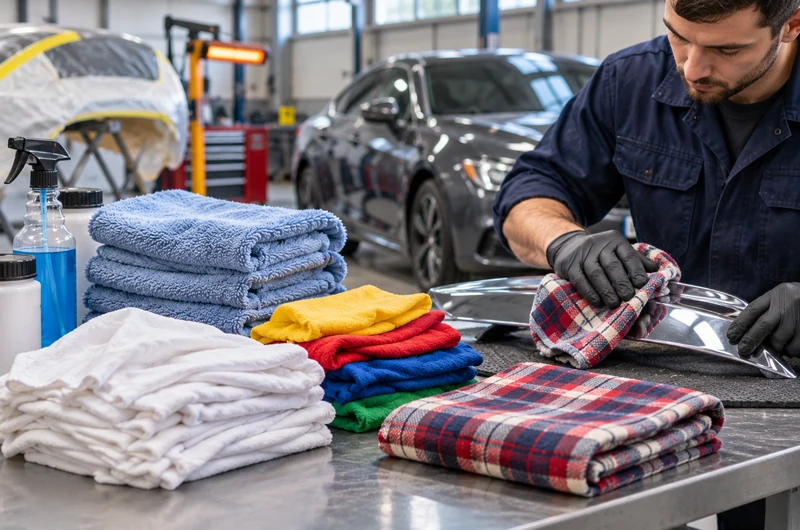
A car can look completely different after a visit to a panel beating shop. Dents are repaired, damaged panels are restored, and the paintwork is brought back to a clean finish.
Behind that work, there’s a surprising amount of cleaning.
Panel beaters and detailers use cloths throughout the day to wipe tools, remove polishing residue, clean equipment and keep work areas tidy. Some jobs involve grease and dust, while others need a much cleaner approach.
The problem is that a cloth suitable for cleaning workshop equipment isn’t necessarily safe for a freshly painted panel.
Choosing the right cleaning cloths for panel beaters means knowing where different materials work best and when a specialist automotive cloth is needed.
Here’s what panel beating shops and car detailing businesses should consider before ordering their cleaning supplies.
What Are the Best Cleaning Cloths for Panel Beaters and Car Detailers?
For general workshop cleaning, cotton T-shirt rags are a good option. They’re absorbent, flexible and useful for wiping dirt, grease and residue from tools and suitable equipment.
Flannel rags are commonly used for polishing certain metal surfaces and finishing work. Towel rags are useful for cleaning jobs that require more absorbency.
However, when working directly on polished paintwork, clear coats or ceramic coatings, a clean, purpose-made automotive microfibre cloth is generally the better choice.
The right cloth depends on the surface you’re cleaning. It’s worth keeping different materials available rather than using the same rag for every job.
Why Cloth Selection Matters in Automotive Bodywork
Panel beating and car detailing involve several stages of cleaning.
Before repairs begin, there may be dirt, oil and road grime to remove. During repair work, tools and equipment need regular wiping. Later, surface preparation and polishing require much greater care.
Imagine wiping grease from a tool and then using that same rag to remove residue from a recently polished panel.
Even if the cloth looks reasonably clean, it may contain grit, oil or other material that shouldn’t touch the vehicle’s finish.
A contaminated cloth can leave marks or transfer unwanted residue. Loose fibres can also cause problems during certain painting and finishing processes.
That’s why cleaning materials should be selected according to the job, not simply because they’re within reach.
1. Flannel Rags for Polishing and Finishing Work
Flannel rags are commonly used by metal polishers, furniture makers, panel beaters and car detailers.
Their softer feel makes them useful for some polishing and finishing tasks, particularly on suitable metal components.
For example, a panel beating shop might use flannel cloths when wiping polishing residue from a metal part or cleaning suitable trim pieces.
Sydney Cleaning Cloths supplies flannel rags for commercial polishing and cleaning applications.
Common uses include:
- Polishing suitable metal components
- Removing residue from selected trim parts
- General finishing work where flannel is appropriate
- Cleaning surfaces that call for a softer cloth
It’s important not to assume that all flannel rags are suitable for painted surfaces.
If you’re working on a clear coat, freshly repaired paint or another delicate finish, use the material recommended by the paint or detailing product manufacturer.
A clean, purpose-made automotive microfibre cloth is generally preferable for direct contact with finished paintwork.
2. White Cotton T-Shirt Rags for General Surface Cleaning
White cotton T-shirt rags are useful when you want to see what you’re removing from a surface.
Their light colour makes dirt and residue easier to notice during wiping.
In an automotive workshop, they can be used for cleaning suitable tools, work areas and non-sensitive components.
White cotton rags are also used in printing and powder coating businesses, where unwanted residue during cleaning can be an issue.
Sydney Cleaning Cloths supplies white T-shirt rags made from 100% cotton.
They’re worth considering for businesses that need an everyday cleaning cloth and prefer to see how much dirt is being picked up.
Keep in mind that white cotton isn’t automatically lint-free.
For final paint preparation, use an approved low-lint wipe, tack cloth or other material specified by the paint manufacturer and workshop procedure.
3. Coloured Cotton T-Shirt Rags for Workshop Cleaning
Not every cleaning job in a panel beating shop involves a vehicle’s paintwork.
There’s also a workshop full of tools, benches, equipment and machinery that needs attention.
Coloured cotton T-shirt rags are useful for this kind of everyday cleaning.
They’re made from 100% cotton and are commonly used in mechanical workshops because they can handle routine grease, oil residue and dirt.
Panel beating businesses may use them for:
- Wiping grease from hand tools
- Cleaning workshop benches
- Removing dirt from suitable equipment
- General maintenance around repair bays
- Wiping machinery after routine servicing
If several people work in the same workshop, keeping a supply of coloured cotton rags near general cleaning areas can be convenient.
Just make sure these cloths stay away from clean polishing and paint preparation areas once they’ve been used for dirty work.
For more advice about workshop materials, read our guide to Best Cleaning Rags for Mechanics and Automotive Workshops.
4. Towel Rags for Wet Cleaning
Towel rags are thicker than ordinary T-shirt material and are useful when a cleaning job involves water or other suitable liquids.
For panel beating and car detailing businesses, they can be used for general wet cleaning, drying appropriate workshop equipment and wiping washable surfaces.
Sydney Cleaning Cloths supplies white and coloured towel rags for commercial cleaning.
They are particularly useful when a lightweight cotton rag becomes saturated too quickly.
However, ordinary towel rags aren’t necessarily suitable for drying painted vehicle panels. Depending on the material, they may leave fibres or create friction against sensitive finishes.
For drying finished paintwork, use a dedicated automotive drying towel and follow the vehicle or coating manufacturer’s instructions.
5. What About Microfibre Cloths for Car Detailing?
Microfibre deserves a separate mention because it plays an important role in professional car detailing.
Unlike general workshop rags, specialist automotive microfibre cloths are designed for tasks such as cleaning glass, removing polish, buffing wax and working on delicate finishes.
Different microfibre constructions suit different jobs.
For example, a plush detailing cloth may be suitable for removing polish from painted panels, while a purpose-made glass cloth is designed to help clean windows without leaving fibres behind.
Even microfibre can cause scratches if it’s dirty, contains grit or is used incorrectly.
Professional detailers should use cloths appropriate for the surface and keep them separate from general workshop cleaning materials.
Sydney Cleaning Cloths specialises in cotton, flannel, towel, fleecy and hospital blanket rags. Its published product range does not list specialist automotive microfibre cloths.
For businesses that handle both panel repairs and detailing, these general cleaning rags can complement the specialist microfibre products used for paintwork.
Which Cleaning Cloth Should You Use?
Here’s a quick comparison of common tasks in panel beating and car detailing workshops.
| Cleaning task | Suitable cloth |
|---|---|
| Cleaning greasy tools | Coloured cotton T-shirt rags |
| General workshop cleaning | Cotton T-shirt rags |
| Checking dirt on suitable components | White cotton T-shirt rags |
| Polishing suitable metal parts | Flannel rags |
| Cleaning wet workshop equipment | Towel rags |
| Removing polish from finished paint | Specialist automotive microfibre |
| Drying painted vehicle panels | Dedicated automotive drying towel |
| Final preparation before painting | Manufacturer-approved low-lint or tack cloth |
These are general guidelines. Always follow the requirements of the surface, cleaning chemical and paint system.
Cleaning Cloths for Paint Preparation: What Should You Avoid?
Paint preparation is one area where choosing the wrong cloth can create extra work.
Before primer, paint or clear coat is applied, the surface needs to be prepared according to the coating manufacturer’s instructions.
Ordinary workshop rags may contain lint, oils or other contaminants that can interfere with the finish.
Using a cloth previously exposed to wax, silicone-based products or greasy equipment can also transfer unwanted material.
For final paint preparation:
- Use wiping materials approved for the paint system.
- Keep paint preparation cloths separate from general workshop rags.
- Never use cloths that contain dirt, grit or grease.
- Follow the specified cleaning and drying procedures.
- Use the appropriate protective equipment and ventilation when handling cleaning chemicals.
Don’t assume that a cloth is suitable for paint preparation just because it feels soft.
Simple Ways to Organise Cleaning Cloths in Your Workshop
When several employees are sharing cleaning supplies, keeping different cloths organised can prevent unnecessary problems.
One approach is to separate materials according to their intended use.
For example, coloured cotton rags could be stored near general maintenance tools, while white cotton rags are kept for cleaner wiping tasks.
Flannel polishing rags can have their own storage area, away from grease, sanding dust and other contaminants.
Specialist microfibre products used for finished paintwork should be kept separate again.
It also helps to:
- Keep unused cloths in a clean, dry place.
- Avoid leaving clean rags exposed to sanding dust.
- Check cloths for grit, hard attachments and loose fibres.
- Remove contaminated rags from general circulation.
- Monitor how quickly different materials are used.
Rags contaminated with paints, solvents or certain oils may require special storage and disposal because of chemical or fire hazards. Follow the relevant safety data sheets and workplace procedures.
Should Panel Beaters and Detailers Buy Cleaning Rags in Bulk?
If you operate a busy panel beating shop, you probably use cleaning cloths every day.
The quantity may vary depending on how many people work in the business and which services you provide.
A small detailing business may use fewer general cleaning rags than a large collision repair centre with several work bays.
For businesses with regular demand, purchasing cotton, flannel or towel rags in bulk may be more convenient than ordering small quantities repeatedly.
Before placing a wholesale order, consider:
- Which rag materials your staff use most often
- The approximate quantity used each week
- Whether you need more than one material
- Available storage space
- The supplier’s pack sizes, pricing and delivery arrangements
If you’re unsure how much to purchase, monitor your usage over a few weeks.
Our article on Buying Cleaning Rags in Bulk in Sydney explains what to check when comparing wholesale orders.
Where to Buy Cleaning Rags for Panel Beaters in Sydney
Sydney Cleaning Cloths is a family-run cleaning rag wholesaler based in Smeaton Grange, NSW 2567.
We’ve been supplying commercial and industrial cleaning rags across Sydney for more than 10 years.
Our customers include mechanical workshops, panel beaters, printing businesses and other industries that use cleaning cloths regularly.
Our product range includes:
- Flannel rags for suitable polishing work
- White cotton T-shirt rags
- Coloured cotton T-shirt rags
- White and coloured towel rags
- Fleecy rags
- Hospital blanket rags
We operate from a 4,000 square metre warehouse and offer free delivery across Sydney Metro.
If you run a panel beating or detailing business, you can view our cleaning rag range and enquire about available materials and wholesale quantities.
Frequently Asked Questions
What are the best cleaning cloths for panel beaters?
Cotton T-shirt rags are useful for general workshop cleaning, while flannel rags are commonly used for suitable polishing and finishing work. For freshly painted panels or delicate finishes, use specialist cloths approved for the surface.
Are flannel rags good for car polishing?
Flannel rags can be useful for polishing certain metal components and other suitable surfaces. For painted panels and clear coats, purpose-made automotive microfibre cloths are generally preferable. Always follow the polishing product manufacturer’s instructions.
Can cotton cleaning rags scratch car paint?
They can, particularly if they contain grit, have rough attachments or aren’t suitable for the finish. Ordinary workshop rags shouldn’t be used as a substitute for specialist paint-safe detailing cloths.
Which cloths are best for cleaning before automotive painting?
Use low-lint wiping materials, tack cloths or other products specified by the paint system manufacturer. Ordinary cotton rags may leave fibres or transfer contaminants, so they shouldn’t automatically be used for final paint preparation.
Can car detailing businesses buy cleaning rags in bulk?
Yes. Sydney Cleaning Cloths supplies cotton, flannel, towel and other industrial cleaning rags at wholesale prices. Businesses can request pricing based on the materials and quantities they need.
Does Sydney Cleaning Cloths deliver to panel beating shops?
Sydney Cleaning Cloths offers free delivery across Sydney Metro from its warehouse in Smeaton Grange. Confirm your delivery suburb and order requirements when requesting a quote.
Buy Cleaning Cloths for Your Automotive Business in Sydney
Panel beating and car detailing involve different types of cleaning, from wiping dirty tools to preparing equipment and polishing suitable metal surfaces.
Having the right cloths available makes it easier to keep those jobs separate.
At Sydney Cleaning Cloths, we supply flannel, cotton, towel and other industrial cleaning rags to businesses throughout Sydney.
If you need a regular supply for your panel beating shop or car detailing business, tell us which materials you’re interested in and how much you expect to use.
Request a Wholesale Cleaning Rag Quote
You can also contact us directly.
Sydney Cleaning Cloths
Phone: 02 9729 0861
Mobile: 0422 344 744
Email: sydneycloths@outlook.com
Location: Smeaton Grange, NSW 2567, Australia
Free delivery across Sydney Metro.