


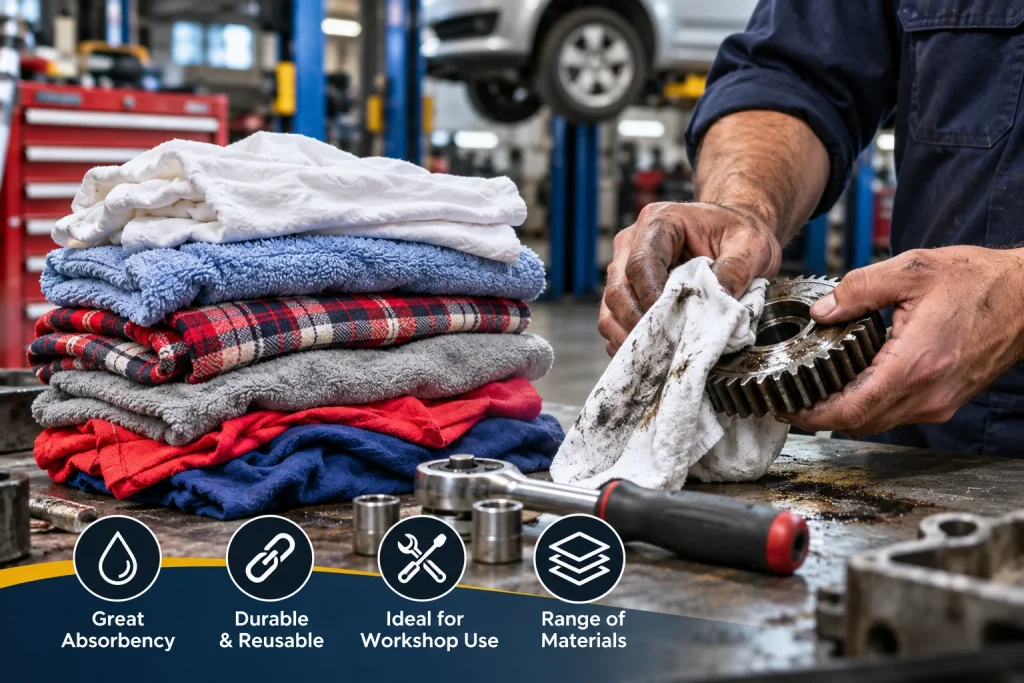
Cleaning rags are one of those supplies that mechanics use without giving them much thought. They’re needed for wiping oil from engine parts, removing grease from tools, cleaning workbenches and dealing with the mess that comes with everyday vehicle repairs.
But anyone who has spent time in a workshop knows that not all rags do the same job.
A thin piece of cotton might be fine for wiping a spanner, while a thicker towel rag is more useful when there’s water to soak up. And if you’re polishing a metal component, you probably don’t want to use the same cloth that’s been sitting beside a greasy engine.
Choosing the right workshop cleaning rags comes down to the material, absorbency and type of cleaning you’re doing.
Whether you operate a small garage, an automotive repair centre or a busy mechanical workshop in Sydney, here’s what to look for when buying cleaning rags for everyday use.
What Are the Best Cleaning Rags for Mechanics?
Cotton T-shirt rags are generally the best option for everyday mechanical workshop cleaning. They’re absorbent, flexible and suitable for wiping grease, oil residue and dirt from tools and equipment.
Coloured cotton rags are widely used for general workshop cleaning, while white cotton rags make it easier to see the dirt being removed.
For jobs involving water or larger amounts of liquid, towel rags are usually more absorbent. Flannel rags are useful for certain polishing tasks, while fleecy rags are another option for heavier industrial cleaning.
Most workshops don’t need every type of rag available, but keeping two or three suitable materials on hand can make cleaning easier.
Why the Type of Cleaning Rag Matters
Think about a typical day in an automotive workshop.
A mechanic might start by changing engine oil, move on to replacing brake components and finish with cleaning tools before the next vehicle arrives.
Each job leaves different types of dirt and residue behind.
Grease from hand tools is relatively straightforward to wipe away, but a cloth used for that job shouldn’t be taken straight to a clean surface where contamination could cause problems.
The material also matters. Some cloths absorb liquids better, while others are easier to work into tight spaces around mechanical components.
If a rag sheds too many fibres or contains grit, it may not be suitable for precision cleaning or polishing.
That’s why it’s useful to choose cleaning cloths according to what your mechanics actually do, rather than buying one material for every job.
1. Coloured Cotton T-Shirt Rags for Everyday Workshop Cleaning
For general workshop use, coloured cotton T-shirt rags are often the first choice.
Made from 100% cotton, these rags are absorbent and flexible enough to handle routine cleaning without being difficult to work with.
They’re commonly used in mechanical workshops because they can handle grease, oil residue and ordinary dirt.
You can use them for:
- Wiping grease from spanners, sockets and other hand tools
- Cleaning workbenches after repairs
- Removing oily residue from suitable machinery surfaces
- Wiping down workshop equipment
- General cleaning around vehicle servicing areas
Cotton cloth is also easy to fold or bunch up when cleaning around awkward shapes.
If your workshop uses large quantities of rags every week, coloured cotton is a good material to consider for regular orders.
Sydney Cleaning Cloths supplies coloured cotton T-shirt rags for mechanical workshops and general industrial cleaning.
2. White Cotton T-Shirt Rags for Cleaner Wiping Jobs
White cotton T-shirt rags offer many of the same benefits as coloured cotton, but there’s one useful difference.
You can see what you’re wiping off.
When you’re cleaning a component and checking whether oil, grease or dirt is still present, a white cloth makes the residue easier to notice.
That can be helpful for certain mechanical maintenance and inspection tasks.
White cotton rags are also used by printing and powder coating businesses, where controlling unwanted residue and loose fibres is important.
However, white cotton doesn’t automatically mean lint-free.
If you’re working on sensitive engine components, internal assemblies or equipment that requires a specific cleaning standard, use the material recommended by the manufacturer.
For general wiping and cleaning where visibility matters, white cotton rags are a useful addition to the workshop.
3. Towel Rags for Water and Wet Cleaning
Sometimes a regular cotton T-shirt rag simply isn’t absorbent enough.
If you’re wiping water from equipment or cleaning a wet workbench, a heavier towel rag can be more convenient.
Towel rags are made from thicker, absorbent towelling material. They can hold more liquid than many lightweight cotton cloths, although the amount varies with the fabric.
In an automotive workshop, they’re useful for:
- Drying suitable equipment and tools
- Wiping water from benches and work areas
- General wet cleaning
- Cleaning washable workshop surfaces
Sydney Cleaning Cloths supplies both white and coloured towel rags.
Towel material isn’t necessarily the right choice for every job. It can be bulky around small components and may leave fibres on surfaces that need careful cleaning.
For everyday mechanical work, cotton T-shirt rags are often enough. Towel rags are more useful when absorbency is the main concern.
4. Flannel Rags for Polishing and Finishing Work
Automotive cleaning isn’t always about removing oil and grease.
Panel beaters, metal polishers and car detailers also need suitable cloths for polishing and finishing work.
Flannel rags have a softer feel than many general cleaning cloths, making them useful for certain polishing applications.
They may be used for wiping polishing residue from suitable metal surfaces or carrying out finishing work where a softer material is preferred.
One thing worth remembering is that a soft rag can still cause scratches if it contains dirt or grit.
If you’re working on vehicle paintwork, clear coats or other delicate finishes, use a clean cloth specifically recommended for that surface.
Keep polishing cloths separate from rags used for grease and machinery cleaning.
5. Fleecy Rags for Heavier Cleaning Jobs
Not every automotive business deals only with passenger cars.
Truck repair workshops, equipment maintenance businesses and industrial mechanics may regularly clean larger machinery covered in oil, grease and accumulated dirt.
Fleecy rags are used for heavier industrial cleaning and general oil clean-ups.
They’re also used in mining and other industries where equipment requires regular maintenance.
For workshops dealing with heavily soiled machinery, fleecy rags may be useful alongside ordinary cotton cloths.
However, cleaning rags shouldn’t replace suitable spill control products.
If you’re dealing with a significant oil or chemical spill, follow your workplace procedures and use the correct absorbents and protective equipment.
6. Hospital Blanket Rags for General Workshop Maintenance
Hospital blanket rags are another material used in commercial cleaning.
They’re soft, absorbent and durable, making them suitable for general maintenance work where large quantities of cleaning cloths are needed.
They may be useful for cleaning larger work areas, maintenance equipment and other suitable surfaces around a workshop.
For most mechanics, cotton T-shirt rags will still be the more familiar option for everyday tool cleaning.
Hospital blanket rags are worth considering when your business also needs cloths for general facility maintenance.
Which Cleaning Rag Is Best for Each Workshop Job?
Different cleaning tasks call for different materials. Here’s a quick comparison.
| Workshop cleaning job | Suggested rag |
|---|---|
| Wiping grease from tools | Coloured cotton T-shirt rags |
| Cleaning engine exteriors | Cotton T-shirt rags |
| Checking dirt and oil residue | White cotton T-shirt rags |
| Drying wet workbenches | Towel rags |
| Polishing suitable metal surfaces | Flannel rags |
| Cleaning heavily soiled equipment | Fleecy rags |
| General workshop maintenance | Cotton, towel or hospital blanket rags |
These are general recommendations. Always consider the surface you’re cleaning, the substances involved and any manufacturer’s instructions.
Cotton Cleaning Rags vs Disposable Wipes
Many automotive workshops keep both cotton rags and disposable wipes in stock.
Cotton rags are commonly used for general cleaning because they’re flexible, absorbent and available in wholesale quantities.
Disposable wipes can be convenient for particular jobs, especially when a fresh wipe or a product made for a specific chemical is required.
For example, wiping grease from a dirty spanner doesn’t usually require the same material as cleaning a component before applying a specialist coating.
The cost is another consideration.
A workshop with several mechanics may use a substantial quantity of cleaning cloths every week. Purchasing cotton rags in bulk can make it easier to manage those supplies, depending on the price and quantity ordered.
Disposable wipes still have their place. The aim is to use the appropriate material for the job rather than expecting one cloth to handle everything.
What Should You Check When Buying Cleaning Rags for Your Workshop?
If you’re responsible for ordering supplies, it’s worth spending a little time choosing the right materials before purchasing a large quantity.
Think about the jobs your mechanics do most often
For a general vehicle repair workshop, cotton T-shirt rags may cover most routine cleaning.
If your business also handles detailing, polishing or heavy equipment repairs, you might need additional materials.
Ask your mechanics which cloths they use most frequently. Their answers will give you a better idea of what to order.
Check absorbency and material
Some cloths become saturated quickly, while others are thicker and hold more liquid.
For ordinary grease and dirt, cotton rags are usually suitable.
If you’re regularly wiping water or cleaning wet surfaces, towel rags may work better.
For polishing and delicate work, check that the material is appropriate for the surface.
Look at the condition of the cloths
Cleaning rags should be suitable for the work they’re being used for.
Check for unwanted attachments, grit, excessive lint and other materials that could damage equipment or interfere with cleaning.
This is particularly important when working around precision components or finished surfaces.
Work out how much you use
A garage with two mechanics won’t necessarily use the same quantity of rags as a large automotive repair centre.
If you’re unsure how much to order, monitor your usage for a couple of weeks.
Once you know how quickly your stock runs out, you can estimate a suitable quantity and plan future orders.
Compare wholesale prices
When comparing cleaning rag suppliers, look beyond the total price.
Check the weight or quantity supplied, the type of material, delivery costs and whether GST is included.
The lowest price isn’t much use if the cloths aren’t suitable for your workshop.
Should Automotive Workshops Buy Cleaning Rags in Bulk?
For workshops that use rags every day, bulk purchasing is often more convenient than buying small packs repeatedly.
It means you can keep cleaning supplies available without having to place an order every few days.
Buying larger quantities may also reduce the cost per kilogram, depending on the supplier’s pricing.
Before ordering, consider how much storage space you have and how quickly the rags will be used.
Keep clean rags in a dry, tidy area away from oil, chemicals and workshop dust.
If your workshop needs several materials, store them separately so your mechanics can find the appropriate cloth without mixing clean polishing rags with general cleaning stock.
How to Handle Used Cleaning Rags Safely
Used workshop rags can contain engine oil, grease, solvents, paints and other chemicals.
They shouldn’t all be treated as ordinary rubbish.
Keep unused rags separate from contaminated cloths and follow your workplace procedures for collecting and disposing of used materials.
Rags contaminated with certain oils, coatings and solvents may create a fire hazard if stored incorrectly.
Don’t leave contaminated cloths piled up near heat, sparks or ignition sources. Use the appropriate containers and follow the relevant safety data sheets and workplace requirements.
For larger spills, use a suitable spill kit rather than trying to absorb everything with ordinary cleaning cloths.
Keeping a clear system for used rags helps reduce contamination and makes workshop housekeeping easier.
Where to Buy Cleaning Rags for Mechanics in Sydney
If you’re looking for a regular supply of cleaning rags for your automotive business, Sydney Cleaning Cloths offers wholesale quantities of cotton and industrial cleaning materials.
We’re a family-run cleaning rag wholesaler based in Smeaton Grange, NSW 2567.
With more than 10 years of trading experience, we supply cleaning rags to mechanical workshops, panel beaters, printing companies and other commercial businesses across Sydney.
Our product range includes:
- Coloured cotton T-shirt rags
- White cotton T-shirt rags
- Flannel rags
- White and coloured towel rags
- Fleecy rags
- Hospital blanket rags
We operate from a 4,000 square metre warehouse and offer free delivery across Sydney Metro.
You can browse our range of cleaning rags and contact us for current wholesale pricing.
If you’re unsure which material is suitable for your workshop, tell us what you’re cleaning and how many rags you expect to use.
Frequently Asked Questions
What are the best cleaning rags for mechanics?
Cotton T-shirt rags are commonly used for everyday mechanical cleaning. They’re suitable for wiping grease, oil residue and dirt from tools, workbenches and machinery. Towel rags can be useful for wet cleaning, while flannel rags are used for certain polishing jobs.
Are cotton rags good for removing oil and grease?
Yes. Cotton rags are useful for wiping oil and grease residue from suitable mechanical surfaces. For major spills or chemical clean-ups, use the correct spill control products and follow workplace safety procedures.
Are white or coloured cleaning rags better for workshops?
Coloured cotton rags are commonly used for general workshop cleaning. White cotton rags are useful when you want to see the dirt or residue being removed. Both materials have their place, depending on the task.
What cleaning rags should panel beaters use?
Panel beaters may use cotton rags for general cleaning and flannel rags for suitable polishing work. Painted or scratch-sensitive surfaces may require specialist detailing cloths.
Can I buy workshop cleaning rags in bulk?
Yes. Sydney Cleaning Cloths supplies cleaning rags at wholesale prices. You can enquire about the materials, quantities and pricing available for your workshop.
Does Sydney Cleaning Cloths deliver to automotive workshops?
Sydney Cleaning Cloths offers free delivery across Sydney Metro from its Smeaton Grange warehouse. Provide your delivery suburb when requesting a quote to confirm the arrangements.
Order Workshop Cleaning Rags from Sydney Cleaning Cloths
Whether you run a small garage or manage supplies for a larger automotive workshop, having the right cleaning rags available makes everyday work easier.
At Sydney Cleaning Cloths, we supply cotton T-shirt rags, flannel rags, towel rags and other industrial cleaning cloths to businesses across Sydney.
If you need cleaning rags for mechanics, tell us what type of work your workshop does and how much stock you’re looking to purchase.
Request a Wholesale Cleaning Rag Quote
You can also contact us directly.
Sydney Cleaning Cloths
Phone: 02 9729 0861
Mobile: 0422 344 744
Email: sydneycloths@outlook.com
Location: Smeaton Grange, NSW 2567, Australia
Free delivery across Sydney Metro.